
21 Dragon Tail Hairstyles That Turn Heads Instantly
21 stunning dragon tail hairstyles from sleek pull-throughs to wedding-ready braids. Step-by-step techniques for every hair length, texture, and skill level.

HairLysia Editorial · Researched, written, and reviewed by the HairLysia editorial team.
Updated May 30, 2026

The dragon tail hairstyle gets its name from the look it creates — a textured, segmented braid that runs down the back like a dragon's ridged spine. It combines pull-through braids, Dutch braids, and bubble techniques to build a three-dimensional, scaled effect that no single traditional braid can achieve. Whether you want a five-minute everyday version or a show-stopping wedding style, the dragon tail delivers drama at every level.
These twenty-one dragon tail variations cover every texture — straight, wavy, curly, and coily — and look most dramatic on medium to long hair. If you love braided hairstyles and want to take them to the next level, start here.
1. The Classic Dragon Tail Pull-Through
The classic dragon tail uses stacked elastics and the pull-through method — small ponytails layered vertically, with each upper section pulled through the one below and fanned outward to create wide, rounded segments that look like dragon scales. Each segment sits on top of the next, creating a cascading, three-dimensional spine running from the crown to the nape and beyond.
Start with a ponytail at the crown, divide the remaining hair into horizontal sections below it, and thread each upper section through the lower one. Fan each pulled-through section outward aggressively for maximum width and volume. The pull-through technique requires no actual braiding skill, making this the most accessible dragon tail on the list. See our braided hairstyles guide for more pull-through techniques.

2. The Tight-Scale Dragon Tail
The tight-scale dragon tail is the restrained cousin of the classic — the crown is brushed smooth and gathered under a scrunchie, and the segments below are left compact rather than fanned wide. Each pulled-through section overlaps the one beneath it like roof shingles, so the braid reads as a dense, narrow ridge of scales instead of a broad, showy fan. The finished spine runs the full length of the back and tapers to a slim tail at the tip.
The trick is tension. Keep every elastic snug, thread each section through cleanly, and resist the urge to pancake — a gentle thumb-and-finger pinch at the edge of each segment is all the shaping it needs. A fabric scrunchie over the top elastic hides the anchor and gives the smooth crown a soft finish. This version holds beautifully on long hair and survives a full day without loosening, which makes it the most durable dragon tail on the list. See our braided hairstyles guide for more stacked-elastic techniques.

3. The Dragon Tail Mohawk
A French-style dragon tail running along the center of the head from forehead to nape creates a mohawk-like ridge of dramatic texture. The sides are pulled tightly into the central braid, creating a sleek profile with dramatic height along the crown. The dragon tail's segments create the spiny, ridged quality that makes this a true statement style.
The dragon tail mohawk is the boldest version — it commands attention at parties, concerts, and festivals. The tight tension at the sides requires gel or edge control for a clean finish. For a softer everyday version, pancake the center braid for width rather than height. This works best on medium to long hair with some natural texture.

4. The Dragon Tail With Hair Rings
Metal hair rings and cuffs placed at each segment of the dragon tail create an armored, medieval quality — each ring marks a scale division and adds metallic dimension. Gold rings on black hair, silver rings on blonde or silver hair, and mixed metals on brown hair each create a distinct aesthetic.
Hair rings transform the dragon tail from a braided style into a piece of wearable art. The dragon tail's segmented structure is the ideal canvas for accessories because each segment provides a natural mounting point. This decorated version is one of the most popular holiday and party styles and a cosplay and fantasy-event staple.

5. The Softened High-Crown Dragon Tail
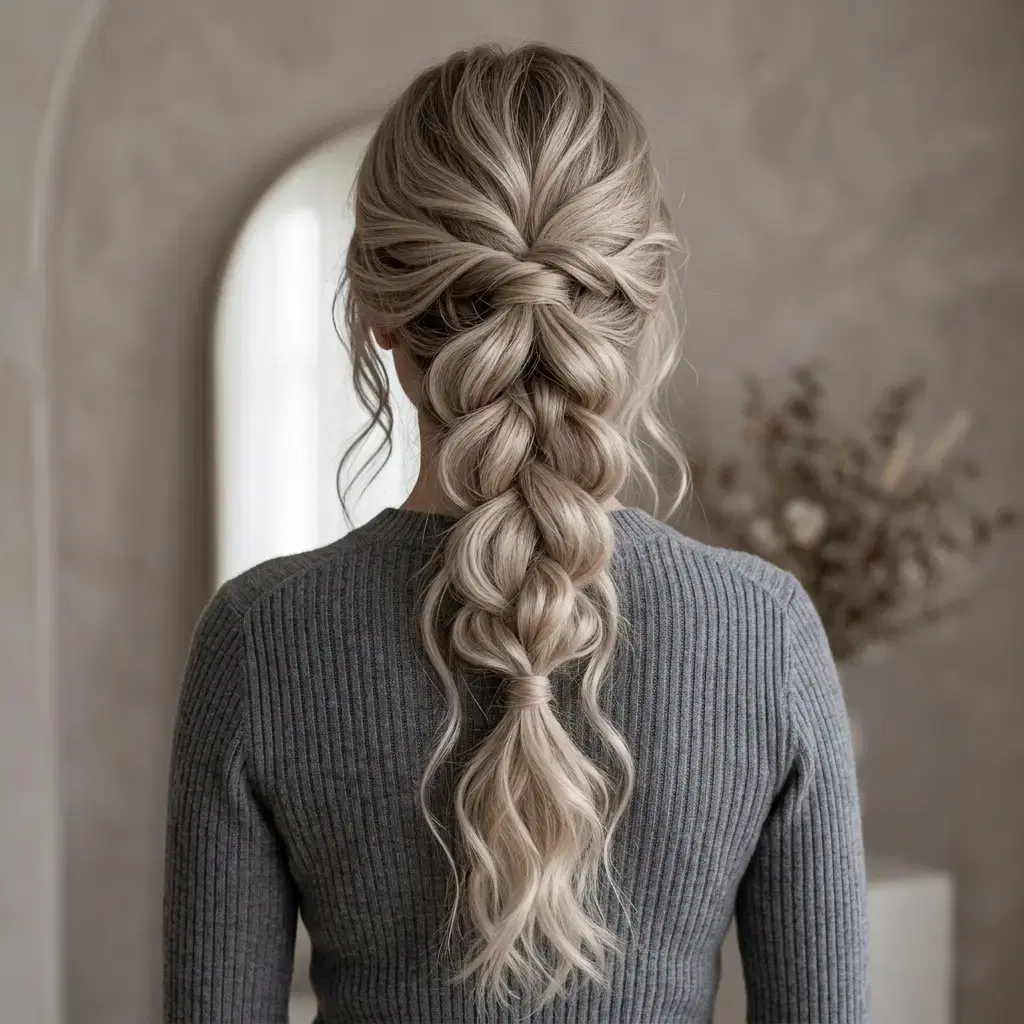
This version starts right at the top of the crown and travels the entire length of the head, so the segmented spine is visible from the very first inch. What softens it is everything happening around the braid: the crown is smoothed but not slicked, and a few cool-toned tendrils are pulled free at the temples and nape so the style breathes instead of gripping. The braid itself stays neat and defined — the looseness lives only at the edges.
Build it on a high ponytail base, then work pull-through segments down the back, pancaking each one just enough to round it out. Once the braid is finished, tug two or three fine pieces loose at the hairline and let them fall against the neck. That single step is the difference between severe and romantic. Ashy and cool blonde tones show the segment shadows especially well, which is why this reads as sculptural on long hair even in flat daylight.

6. The Dragon Tail Updo
A dragon tail that is coiled and pinned at the nape creates a textured updo with visible scale-like segments — more dramatic than a standard bun and more structured than a messy chignon. The segmented braid coils into a spiral, and each scale segment remains visible in the finished shape.
The dragon tail updo is an elegant formal option for weddings, galas, and holiday parties. The texture of the dragon tail makes the updo more interesting than a smooth chignon from every angle. Secure with bobby pins at each segment to maintain the scale pattern in the coiled shape. Leave face-framing tendrils free for softness.

7. The Side Dragon Tail
The side dragon tail sweeps the entire braid over one shoulder, creating an asymmetric silhouette that shows the scale pattern from the front. The braid starts at one temple, runs diagonally across the crown, and drapes over the opposite shoulder. The diagonal line adds drama and the front-facing placement ensures the pattern is visible in conversation and photographs.
The side dragon tail is the most photogenic version because the braid is visible in selfies and front-facing photos. It is the preferred version for party styling and events where you want the braid on display. Wavy and curly textures add natural dimension to the side-draped braid.

8. The Chestnut Brown Dragon Tail
Warm chestnut is arguably the most flattering base a dragon tail can have. The natural shift between cool root shadow and sunlit copper ends means every rounded segment catches light differently, so the scales separate visually without any teasing or product. Here the braid falls forward over one shoulder and tapers to a fine, wispy end, with a few strands left loose at the temple to keep the front soft.
Brunettes get this dimension for free — where blonde relies on shadow and dark hair relies on shine, brown hair has enough tonal range to do both. Keep the segments loosely pancaked rather than pulled wide so the shape stays fluid, and skip shine spray, which flattens the contrast between segments. The look sits comfortably on straight and wavy textures alike. See our braided hairstyles guide for more pull-through variations.

9. The Double Dragon Tails
Two dragon tails — one on each side of a center part — create a symmetrical, twin-dragon effect that is twice the visual impact. Each side uses the pull-through, bubble, or Dutch technique independently, and the pair frames the face and neck with dramatic, segmented texture on both sides.
Double dragon tails are the most festival-ready and costume-friendly version. The twin braids are popular for cosplay, Renaissance fairs, and party events where maximum drama is the goal. They also function as a practical summer style that keeps all hair off the neck. Teens and women in their twenties gravitate toward this bold variation.

10. The Dragon Tail With Volume
A teased or crimped dragon tail where each segment is backcombed before being fanned outward creates maximum volume — the scales stand tall and wide, creating the most dramatic, three-dimensional version. The volume makes the dragon tail look twice the size and gives it a wild, untamed, editorial quality.
The volumized dragon tail is a red-carpet and editorial style that creates maximum visual impact. A root-lifting spray and backcombing before braiding build the foundation. Hairspray after fanning each segment locks the volume in place. This is not an everyday style — it is for parties, performances, and moments where you want every eye in the room. See our blow-dry guide for volume techniques.

11. The Dragon Tail Ponytail
A high ponytail base with the dragon tail technique applied only to the ponytail — leaving the roots and sides sleek — creates a hybrid style. The structured pony base adds height while the segmented tail hanging below adds the dragon texture. The effect is sporty and dramatic simultaneously.
The dragon tail ponytail is more wearable than a full-head dragon tail because the front stays sleek and familiar. It works for workouts, casual outings, and any situation where the full dragon tail feels too bold. The ponytail base can be high, mid, or low depending on the formality. See our ponytail guide for more textured ponytail variations.

12. The Dragon Tail With Color Pop
Colored extensions or hair chalk applied to alternating segments of the dragon tail create a scaled, color-shifting effect — each segment is a different shade, mimicking the iridescent quality of dragon scales. The color transitions can be subtle — different tones of the same hue — or dramatic with contrasting colors.
Color-shifting dragon tails are the most visually spectacular version and a staple at festivals, cosplay events, and party nights. Clip-in colored extensions are the safest option for temporary color without commitment. For permanent color, see our colored hair care guide. Balayage with strategic color placement creates a built-in dragon scale color shift.

13. The Dragon Tail Half-Up
A half-up dragon tail takes the top section of hair through the pull-through or bubble technique while the bottom half hangs freely. The dragon tail sits like a raised spine at the crown while the loose hair flows beneath. The combination of structured texture above and natural flow below creates an accessible, everyday version.
The dragon tail half-up is the most wearable everyday version because it balances drama with ease. The top section creates the eye-catching element while the loose bottom keeps the style from feeling too elaborate for casual settings. It works on medium and long hair and on every texture. For the loose section, heat-free waves add textural contrast beneath the structured braid.

14. The Raised Dutch Dragon Braid
A Dutch braid — crossing sections under rather than over — is what lifts a braid off the scalp instead of sinking it in, and that raised ridge is the purest dragon spine there is. Worked from the front hairline back along one side of the head, the auburn braid here sits proud of the scalp in a run of even chevron links, then continues past the ear and tapers to a slim tied end.
This is the most traditional braided dragon tail, and the one worth learning first if you want the ridge rather than the bubbles. Take clean, consistent sections and keep the tension firm at the scalp — the raised effect collapses the moment you let a pass go slack. Pulling gently at the outer edge of each completed link widens the spine without flattening it. The under-crossing gives noticeably more grip than a French braid, which helps on fine or slippery straight hair that tends to slide loose.

15. The Layered Dragon Tail
The layered dragon tail adds extensions or additional sections that cascade at different lengths — some segments end at the mid-back while others extend further, creating a layered, tapered silhouette like a dragon's tail that narrows toward the tip. The taper creates a more natural, organic shape than the standard uniform-width version.
The layered version is the most realistic dragon tail silhouette — wide and dramatic at the crown, narrowing toward the end like an actual tail. Graduated elastics — closer together at the top, further apart at the bottom — create the taper. This is the most popular version for editorial and photographic purposes. Layered haircuts create a natural foundation for this tapered effect.

16. The Curly Dragon Tail
The curly dragon tail embraces natural curls within the segmented structure — each bubble or pull-through segment contains curly texture that expands the scale effect naturally. The curls add built-in volume to each segment without backcombing or teasing, creating a dramatic, full dragon tail with natural texture.
The curly dragon tail is one of the most striking versions because the curl texture creates organic, irregular scale shapes. A curl cream applied before sectioning defines each curl within the segment. Coily hair creates the most voluminous dragon tail naturally. This is one of the most low-maintenance dragon tail variations because the natural texture does much of the styling work.

17. The Dragon Tail With Cornrow Base
Cornrows along the sides feeding into a central dragon tail create a dramatic, sculpted silhouette — the flat, close-to-the-head sides contrast with the raised, textured center spine. The cornrow lines add their own geometric pattern that complements the dragon scales above. This hybrid technique combines African braiding tradition with the dragon tail trend.
The cornrow-based dragon tail is one of the most striking versions for coily and textured hair. The cornrow foundation creates a polished, sculptural frame while the center dragon tail adds dramatic volume and height. This style lasts several days with proper nighttime care — a satin bonnet or pillowcase preserves the structure. See our braided hairstyles guide for more cornrow-based styles.

18. The Bohemian Dragon Tail
The bohemian dragon tail is the loose, undone, imperfect version — segments are pulled out aggressively until the boundaries between them blur, creating a wide, textural braid with a dragon-tail quality that looks effortless rather than structured. Face-framing tendrils, loose wisps, and woven-in accessories complete the boho aesthetic.
The bohemian dragon tail is the most wearable version for women who love the concept but want a softer, more relaxed execution. Ribbons, thin scarves, or small flowers woven through the segments add bohemian character. This is a beautiful summer and fall festival style. Wavy hair creates the most natural-looking bohemian dragon tail.
19. The Dragon Tail Faux Hawk
The dragon tail faux hawk combines the dragon tail technique with volume at the crown to create a raised, hawk-like silhouette. The front sections are teased or volume-sprayed upward and blended into the beginning of the dragon tail at the crown. The result is a dramatic, high-volume style with the dragon's segmented spine running from the lifted front to the tapered end.
The dragon tail faux hawk is one of the boldest styles on this list — part updo, part mohawk, all drama. It works for parties, performances, and editorial shoots where maximum visual impact is the goal. The faux hawk height can be subtle or extreme. Hairspray and backcombing at the front create the lift. For women over 40 who want edge, a softer version with less height creates a striking, age-appropriate look.

20. The Mini Dragon Tail
The mini dragon tail uses only a small section of hair — like a half-up portion or a single section at the crown — through the dragon tail technique while the rest of the hair remains loose. The mini version creates the scaled, textured effect as an accent detail rather than a full-head style. Three to five small segments are enough to create the dragon tail pattern.
The mini dragon tail is the most everyday-wearable version. It takes under three minutes, uses minimal elastics, and adds an interesting textural detail to otherwise simple straight or wavy loose hair. This is the ideal entry point for anyone curious about the dragon tail trend who does not want to commit to the full style. The mini version also works on short hair and bobs where a full dragon tail is not possible.

21. The Wedding Dragon Tail
The wedding dragon tail is one of the most breathtaking bridal braids — a full pull-through or Dutch dragon tail adorned with crystal pins, pearl clips, or fresh flowers woven between the segments. The textured, three-dimensional shape photographs beautifully from every angle during the ceremony and reception, giving your photographer dramatic detail shots from behind.
Pair it with a cathedral veil draped behind the braid for a romantic bridal moment, or thread a delicate hair vine through the segments for sparkle that catches the light when you walk down the aisle. The wedding dragon tail works on every hair color and texture, and can be combined with a half-up front for face-framing softness. See our wedding hairstyles guide for more bridal inspiration and our updo guide for other formal gathered styles.

How to Create a Dragon Tail Hairstyle — Video Tutorial
If you have never tried a dragon tail before, watching the technique in motion is the fastest way to learn. The pull-through dragon tail looks complex but the actual mechanics are surprisingly simple — it is just a series of stacked ponytails threaded through each other and fanned outward. The key details that make or break the style are the tension you apply when pulling each section through, the size of each horizontal section (smaller sections create more segments and a more detailed scale pattern), and the aggressiveness with which you pancake each segment outward after construction.
The tutorial below walks through the complete process from start to finish — how to section the hair, where to place each elastic, the threading motion, and the all-important fanning technique that transforms a simple stack of ponytails into the dramatic dragon tail shape. It also covers common mistakes like uneven segment sizes and how to fix a section that did not fan symmetrically. Whether you are attempting the classic pull-through, the low dragon tail, or the half-up variation, the foundational technique demonstrated here is the same.
Video credit: @EverydayHairInspiration on YouTube — an excellent channel for step-by-step braiding tutorials. We recommend subscribing for more hairstyle inspiration and technique breakdowns.
Frequently Asked Questions
The easiest method is the pull-through technique: start with a ponytail at the crown, create a second ponytail two inches below, split the upper ponytail around the lower one and combine it with a third ponytail below that, and repeat. Fan each section outward for the scale effect. No braiding skill is required — watch the video tutorial above for a full walkthrough. For the braided version, a Dutch braid with each section pulled outward creates the raised, ridged spine. See our braided hairstyles guide for more techniques.
A pull-through or bubble dragon tail lasts one day — it is a daily style that comes out at night. A tightly braided Dutch or cornrow-based dragon tail can last two to three days with a satin bonnet or pillowcase at night. The style holds best on second-day or third-day hair with some natural grip. A light hairspray after construction extends hold throughout the day.
Yes — medium-length hair creates a shorter dragon tail with four to six segments rather than the ten-plus segments possible on long hair. The mini dragon tail and the dragon tail half-up are the best options for medium lengths. For a full-length effect on medium hair, clip-in extensions add the extra inches needed for more segments.
HairLysia Editorial
Editorial Team
HairLysia Editorial is the byline for articles produced by the HairLysia team. Drafts are AI-assisted and reviewed by a human editor before publication; where we cite research, we link the primary source so you can check it yourself. Read our editorial policy for how we work.
You may also love

20 Braided Hairstyles From Casual to Couture
19 min readJune 13, 2026

20 Fishtail Hairstyles for Every Occasion and Texture
20 min readMay 30, 2026

20 Party Hairstyles That Command Every Room
17 min readMay 21, 2026