
20 Balayage Hairstyles From Subtle to Dramatic
20 stunning balayage hairstyles for every base color and texture — expert techniques for natural-looking, hand-painted highlights that grow out beautifully.
HairLysia Editorial · Researched, written, and reviewed by the HairLysia editorial team.
Updated June 13, 2026

Balayage is the hand-painted highlighting technique that creates the most natural-looking color dimension — sweeping lighter tones through the mid-lengths and ends in a freehand gradient that mimics the way the sun naturally lightens hair. Unlike traditional foil highlights, balayage creates soft, blended transitions without harsh lines, which means it grows out beautifully and requires salon visits only every three to four months.
These twenty balayage styles cover every base color from blonde to black, with specific guidance on tone selection and maintenance. For preserving your balayage between appointments, see our colored hair care guide.
1. Face-Framing Balayage
The lightest balayage tones concentrated at the face-framing pieces — the most universally flattering balayage placement. The lighter tones brighten the complexion and draw attention to the eyes and cheekbones. Face-framing pieces get the most lightening while the rest of the hair has a subtler gradient.
Face-framing balayage is the most popular first-time balayage request because it creates maximum impact with minimum coverage. The lighter face-framing pieces work on every base color from blonde to brown to black. This grows out the most gracefully of any highlighting technique.

2. Caramel Balayage on Brown Hair
Warm caramel tones hand-painted through brown mid-lengths and ends — the most popular balayage combination worldwide. The caramel adds warmth and dimension that prevents brown from looking flat. The gradient from darker roots to warmer ends mimics natural sun-lightening.
Caramel balayage works on every brown shade from light chestnut to dark chocolate. The warm tones complement fall and winter wardrobes beautifully and look natural in every lighting condition. This requires salon visits every three to four months — the slowest maintenance schedule of any highlighting technique.

3. Blonde Balayage on Blonde Hair
Lighter blonde tones on a blonde base — adding subtle dimensional variation within the blonde palette. Blonde-on-blonde balayage prevents the flat, one-dimensional quality of single-process blonde by adding brighter pieces through the mid-lengths and ends.
The lightest tones should be placed at the face frame and the ends for maximum brightening effect. Blonde-on-blonde balayage is the most natural-looking way to add dimension to already-light hair. A purple shampoo weekly maintains the cool tones.

4. Honey Blonde Balayage
Warm honey-blonde tones swept through the hair — the softest, most romantic balayage shade. Honey tones add a golden warmth that is universally flattering and looks like natural sun-kissing. This works on light brown and darker blonde bases.
Honey balayage is the most natural-looking shade for light to medium base colors because the warm golden tone mimics how hair naturally lightens. It catches light with a warm glow that brightens the complexion.

5. Dramatic Contrast Balayage
Dark roots with significantly lighter ends — the maximum-contrast balayage that creates a bold, ombré-like gradient. The contrast is three to five shades between root and tip, creating a dramatic, visible gradient. This is the boldest balayage approach.
Dramatic contrast works best on long hair where the gradual transition has space to develop over the full length. The contrast should be blended rather than abrupt — the hand-painted technique creates the soft transition that prevents a harsh line. This is the most impactful balayage for social media and photography.

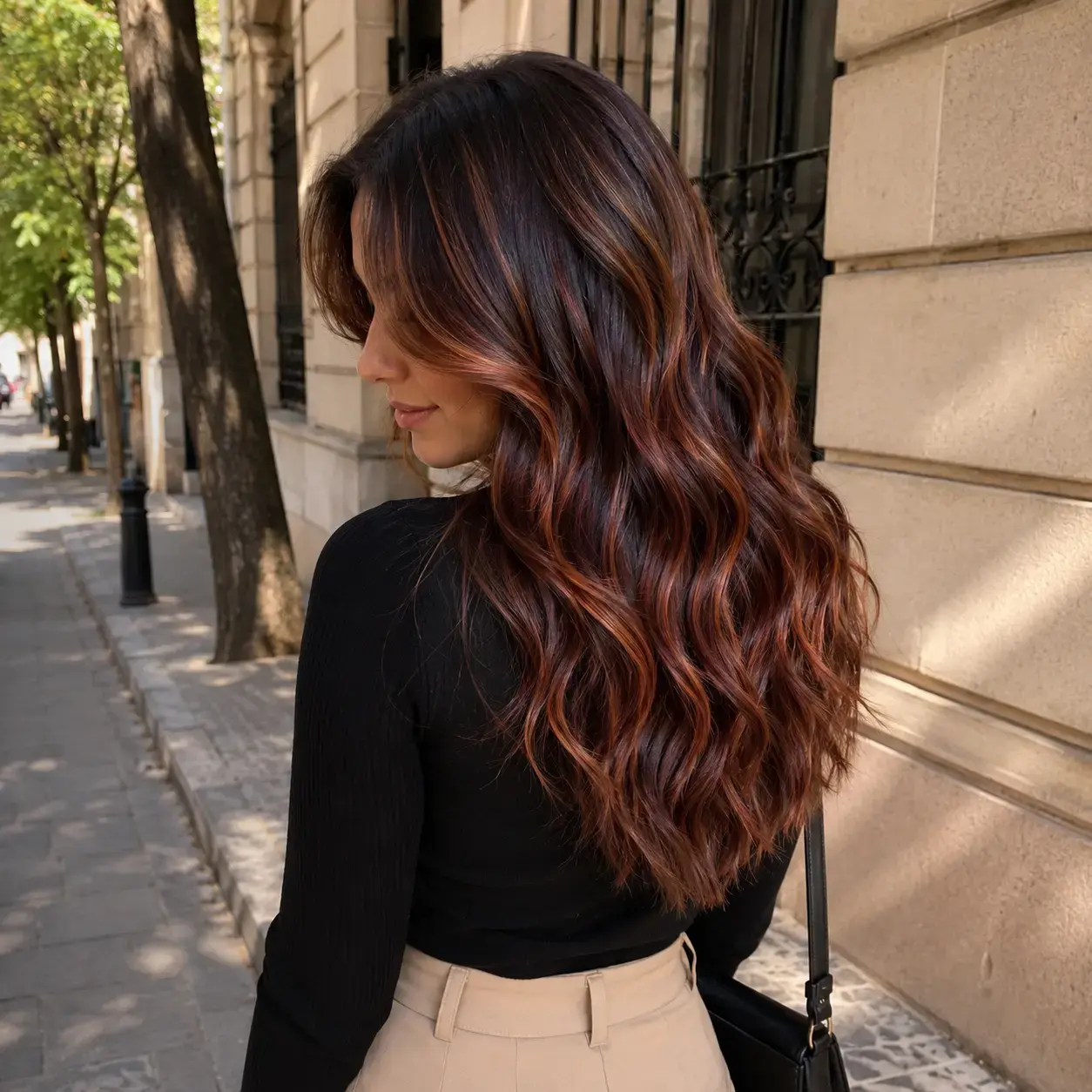
6. Copper Balayage on Dark Hair
Warm copper and auburn tones painted through dark brown or black hair — the fiery, dramatic balayage that adds warmth and dimension to the darkest bases. The copper tones glow against the dark base, creating a rich, autumnal effect. See our red hair guide for more copper-toned options.
Copper balayage is particularly stunning in fall light where the warm tones glow. The dark-to-copper gradient is one of the most dramatic and beautiful balayage color combinations. A color-depositing conditioner in copper maintains vibrancy between appointments.
7. Subtle Balayage Blend
The most minimal balayage — only one to two shades lighter than the base, creating a barely-there gradient that adds dimension without a visible color change. The subtle blend is perfect for first-time balayage or anyone who wants dimension without drama.
The subtle blend is the most natural-looking balayage approach because the lightening is so gradual that it looks like natural variation. This works on every base color and requires the least maintenance — the grow-out is virtually invisible.

8. Ash Balayage
Cool, ashy tones — mushroom, taupe, or silver-ash — painted through brown or dark blonde hair. The cool tones create a modern, editorial effect that contrasts with the warmth of traditional balayage. Ash balayage is the most fashion-forward, contemporary shade option.
Ash tones require purple or blue shampoo to prevent warmth from developing over time. The cool quality makes ash balayage look modern and sophisticated. This works best on naturally cool-toned bases where the ash blends seamlessly.

9. Smokey Balayage
Smokey balayage blends cool, muted tones — charcoal, silver-grey, and mushroom — through dark brown or black hair to create a smoldering, editorial effect that looks like wisps of smoke woven through the lengths. Unlike warm balayage styles, smokey tones create a moody, understated dimension that reads as sophisticated and fashion-forward. The gradient from dark roots to ashy, smoke-toned ends is subtle but deeply impactful.
Smokey balayage works best on naturally cool-toned brown and black bases where the ashy tones blend seamlessly without looking brassy. A purple or blue shampoo is essential for maintaining the cool quality and preventing warmth from developing — see our colored hair care guide for toning maintenance. This shade is particularly stunning on straight and sleek styles where the smokey gradient is visible as a clean, uninterrupted transition.

10. Ruby Red Balayage
Ruby red balayage paints deep, jewel-toned red through the mid-lengths and ends — a rich, luxurious shade that adds warmth and drama to brown and dark bases. The ruby tone sits between true red and burgundy, creating a sophisticated color that glows in warm lighting and adds depth in cooler environments. The hand-painted application keeps the red looking natural and dimensional rather than flat or uniform.
Ruby red balayage is one of the most striking fall and winter color options because the deep jewel tone complements rich, earthy wardrobes beautifully. Maintaining the red vibrancy requires a color-depositing conditioner in a red shade used once or twice a week — red pigments fade the fastest of any color family. See our red hair guide for more red-toned balayage variations and our colored hair care guide for preservation techniques.

11. Cherry Cola Balayage
Cherry cola balayage blends deep burgundy-red and dark brown tones to create a multidimensional color that resembles the rich, effervescent hue of cherry cola held up to light. The red-brown interplay adds warmth and vibrancy to dark bases without the high contrast of traditional highlights — the transition is dark-to-dark with the cherry undertones revealing themselves in movement and sunlight.
This shade is universally flattering because the dark base keeps the color grounded while the cherry-red tones add a subtle, unexpected warmth that brightens the complexion. Cherry cola balayage works on every hair texture and is particularly beautiful on wavy and curly hair where the three-dimensional curl pattern catches the red-brown interplay from multiple angles. The color is low-maintenance because the dark-on-dark gradient has virtually no visible grow-out line.

12. Chocolate to Caramel Gradient
Dark chocolate roots blending to caramel ends — the classic warm-toned balayage gradient. The transition from cool dark tones to warm light tones creates a rich, dimensional effect that looks natural and sophisticated. This is the most requested brown hair balayage combination.
The gradient works best on medium-length to long hair where the transition has space to develop. The face-framing pieces should be the lightest caramel for maximum complexion brightness.

13. Cinnamon Balayage
Cinnamon balayage sweeps warm, reddish-brown tones through the mid-lengths and ends — a spicy, earthy shade that sits between caramel and copper on the warmth spectrum. The cinnamon tone adds a rich, autumnal warmth that is more subtle than copper but more vibrant than standard caramel. On brown hair, cinnamon balayage creates a tonal depth that looks like natural sun-warming rather than salon highlighting.
Cinnamon is one of the most versatile balayage shades because it flatters warm, neutral, and olive skin tones equally. The reddish-brown undertone catches warm lighting beautifully, making it an ideal choice for fall and holiday season updates. Cinnamon balayage pairs well with waves and textured styles where the warm tone is revealed in the movement. Maintain the warmth with a color-depositing conditioner in a golden or copper shade every two to three weeks.

14. Rose Gold Balayage
Pink-toned golden highlights — rose gold balayage creates a feminine, modern effect that is particularly stunning on light brown and dark blonde bases. The pink-gold tone catches light with a warm, romantic shimmer.
Rose gold fades relatively quickly because the pink pigments are delicate. A pink color-depositing conditioner between appointments maintains the rosy tone. See our colored hair care guide for maintenance.

15. Dimensional Balayage With Lowlights
Balayage highlights combined with lowlights — adding both lighter and darker tones to the base for maximum three-dimensional dimension. The lowlights add depth while the highlights add brightness. The combination creates more visual complexity than highlights alone.
Dimensional balayage is the most natural-looking color technique because it replicates how natural hair has variation in both lighter and darker directions. This works on every base color and creates the illusion of thicker, more voluminous hair.

16. Platinum Blonde Balayage
Platinum blonde balayage takes the lightest possible tone — icy, near-white blonde — and sweeps it through the mid-lengths and ends for a high-impact, fashion-forward gradient. The transition from a natural or slightly darker root to platinum ends creates a dramatic, modern effect that is bolder than traditional blonde balayage. The icy tone reflects light with a mirror-like quality that makes the hair look luminous.
Platinum balayage requires the most expertise and processing time of any balayage shade because achieving true platinum without brassiness requires precise toning. A purple shampoo is non-negotiable for maintaining the cool, icy tone — without it, warmth develops within two to three washes. This shade works best on naturally light bases where less lifting is needed, but skilled colorists can achieve platinum balayage even on medium brown bases with careful, gradual lightening sessions. See our blonde hair guide for more platinum styling options.

17. Caramel Ribbons Through Black Hair
Fine caramel ribbons hand-painted through a black base and scattered evenly from the upper lengths down — no gradient, no lightened ends, just warm strands surfacing wherever the wave crests. The ends stay as dark as the roots, which keeps the whole head reading black while the caramel does the work of dimension.
This is the least committal way to warm up black hair because the ribbons are narrow enough to blend rather than stripe. It needs wavy or textured styling to read at all — the caramel only appears where the bend catches light, and flat ironing hides it almost entirely. Maintain with a bond-strengthening treatment on the painted pieces.

18. Lived-In Balayage
Balayage that has been growing out for several months — the roots have grown in and the original gradient has softened into a natural, lived-in look. Rather than viewing grow-out as a problem, the lived-in balayage is a deliberate aesthetic choice. The darker root growth adds natural depth.
The lived-in balayage is the ultimate low-maintenance color because it looks intentional at every stage of growth. The key is the original application — a well-done balayage looks beautiful at two weeks and at four months. This requires the least salon maintenance of any coloring technique.

19. Purple Balayage
Purple balayage paints rich violet, plum, or lavender tones through the mid-lengths and ends — a bold, creative color choice that adds a jewel-toned vibrancy to dark bases. The purple tones range from deep, almost-black plum for a subtle effect to bright violet for a dramatic statement. On black and dark brown hair, purple balayage is revealed primarily in movement and sunlight, creating a hidden-color effect that is understated from one angle and vivid from another.
Purple is one of the most flattering fashion colors because the cool undertones complement a wide range of skin tones and the jewel quality adds richness rather than artificiality. Deep plum balayage requires minimal pre-lightening on dark bases, making it less damaging than blonde or pastel balayage. Brighter violets need more lifting and fade faster — a purple color-depositing conditioner used weekly extends the vibrancy. See our colored hair care guide for maintaining fashion-color balayage.

20. Fire Orange Balayage
Fire orange balayage sweeps vivid, warm orange tones through the ends and mid-lengths — the boldest, most head-turning balayage shade on this list. The fiery orange creates a gradient that looks like flames licking through the hair, transitioning from a darker root through copper and into bright, saturated orange at the tips. This is a statement color that demands confidence and commands attention from every angle.
Fire orange balayage works most dramatically on dark brown and black bases where the contrast between the dark root and the bright orange creates maximum impact. The warm orange tones complement fall wardrobes beautifully and glow in golden-hour lighting. Orange pigments fade faster than most shades, so a copper or orange color-depositing conditioner is essential for maintaining the vibrancy — see our colored hair care guide for specific product recommendations and maintenance schedules.

Frequently Asked Questions
The initial application lasts three to four months before needing a refresh because the hand-painted gradient grows out without a visible root line. A toner or gloss at the three-month mark extends the look further. Balayage is the lowest-maintenance highlighting technique.
Balayage is hand-painted freehand for a natural, blended gradient. Traditional highlights use foils for a more uniform, precise lightening. Balayage grows out more naturally; highlights show root growth faster. Both add dimension, but balayage is lower maintenance.
Yes — balayage works on every base color from blonde to black. On dark hair, the lighter tones create more dramatic contrast. Warmer tones (caramel, copper, honey) blend most naturally on dark bases.
HairLysia Editorial
Editorial Team
HairLysia Editorial is the byline for articles produced by the HairLysia team. Drafts are AI-assisted and reviewed by a human editor before publication; where we cite research, we link the primary source so you can check it yourself. Read our editorial policy for how we work.
You may also love

21 Dragon Tail Hairstyles That Turn Heads Instantly
20 min readMay 30, 2026

20 Fishtail Hairstyles for Every Occasion and Texture
20 min readMay 30, 2026

20 Bob Hairstyles That Flatter Every Face Shape
20 min readJune 12, 2026