
The French Bob Haircut: A Styling Guide for 2026
What makes a French bob French, who it flatters, and how to style its signature soft wave and fringe — the chin-grazing cut that looks effortless because it's cut to be.

HairLysia Editorial · Researched, written, and reviewed by the HairLysia editorial team.
Published May 14, 2026

The French bob looks like it was cut in fifteen minutes by someone who didn't much care — which is exactly the illusion it's engineered to create. That studied carelessness, the soft fringe that falls just so, the wave that looks slept-on rather than set, is the hardest finish in hair to achieve and the easiest to wear once you have it. It's a chin-grazing bob with a Parisian shrug, and it has quietly become one of the most-requested short cuts of the decade.
What separates the French bob from any other short bob isn't the length alone — it's the attitude cut into it. The ends are softened rather than blunt-blunt. The fringe is wispy rather than heavy. The whole thing is built to look like it's growing out a little, on purpose, forever.
What Makes a Bob "French"
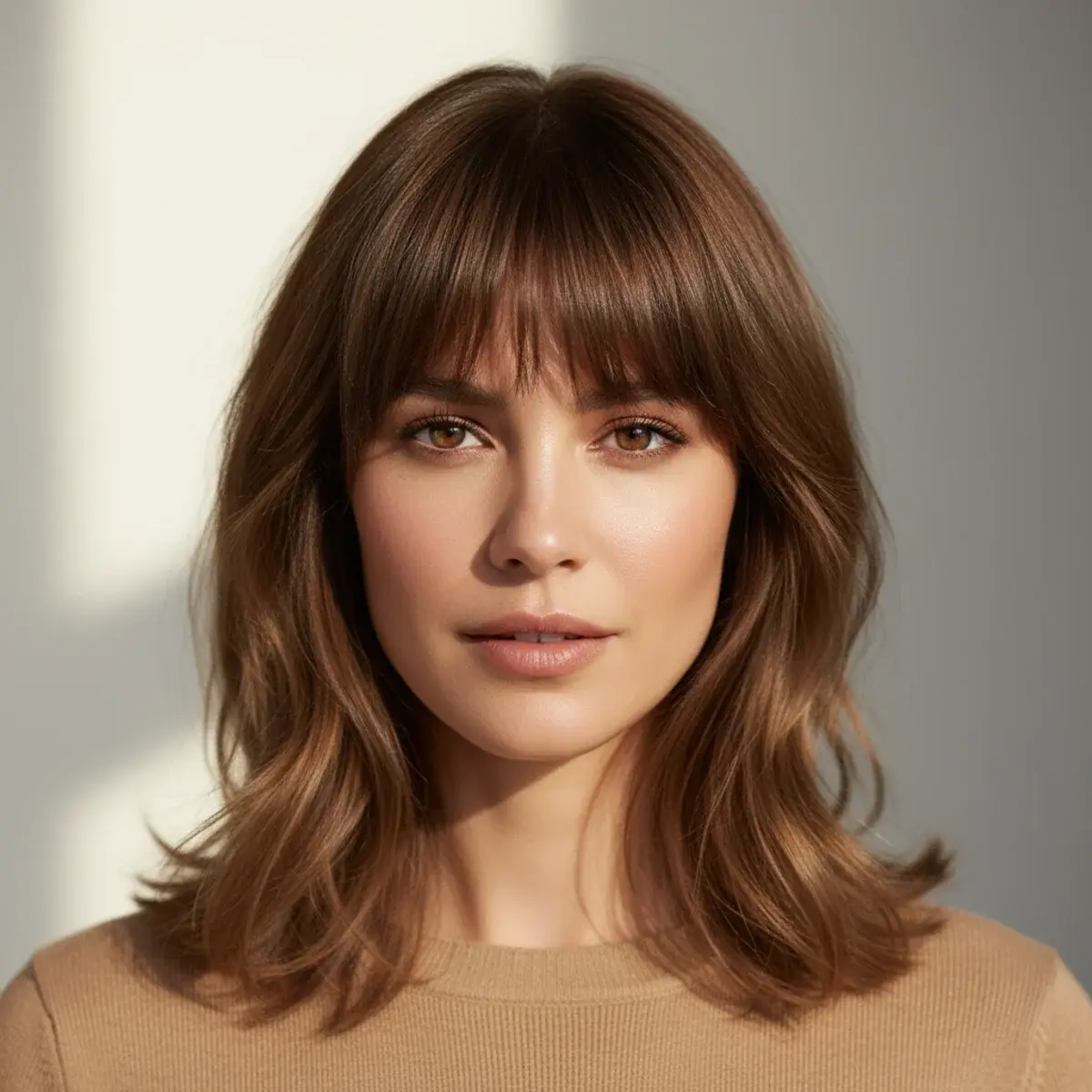
Three things turn an ordinary short bob into a French one. First, the length: it sits high, between the jaw and the lips, shorter than most people expect. Second, the texture: the ends are softened — point-cut or lightly razored — so they fall with a natural bend instead of a sharp line. Third, the finish: it's worn tousled and slightly imperfect, never glassy and flat-ironed.
Add the signature soft fringe — wispy, separated, grazing the brows — and the cut reads unmistakably French. The fringe is what most people picture when they picture the cut, though it's technically optional.
The effect is a bob that looks lived-in from the moment you leave the salon. Where a sleek classic bob announces precision, the French bob whispers nonchalance. They're the same family, opposite temperaments.
Who the French Bob Flatters
Oval and heart-shaped faces wear the French bob most easily — the short length and soft fringe balance their proportions naturally. Round faces can absolutely wear it, but the styling matters: a side part and a longer, wispier fringe add the vertical line a round face wants, where a blunt chin-length finish would echo the curve. Our complete haircut guide explains the geometry in full.
On texture, the French bob is a quiet triumph for fine hair. The short, near-blunt length makes thin hair read denser, and the tousled finish adds the movement fine hair so often lacks. Thick hair can wear it too, with a little internal texturizing so the bob doesn't balloon outward. Naturally wavy hair is almost cheating — it air-dries straight into the look.
How to Style It — The Undone Finish
The whole skill of the French bob is making it look like you didn't try. Two routes get you there.
The air-dry route is the purist's version. Towel-dry to damp, work a texturizing or sea-salt spray through mid-lengths and ends, scrunch gently, and let it dry on its own. Wavy and fine hair take to this beautifully. The result is soft, separated, and genuinely effortless — our heatless curls method can add a touch more bend overnight if your hair falls flat.
The wand route adds intention. Take a curling wand and add a single loose bend through the mid-lengths — not a curl, a bend — alternating direction piece to piece. Then break it all up with your fingers and a mist of texture spray. The aim is movement that looks accidental. Always use a heat protectant first; short hair near the face shows damage fast.
Whatever you do, resist the flat iron. A poker-straight French bob isn't a French bob — it's just a short bob.
The French bob is the only cut I know that you can ruin by styling it too well.
The Fringe Question
A soft fringe is the heart of the classic French bob, but it's a commitment worth thinking through. A wispy, separated fringe — pieces that graze the brows with gaps of forehead showing through — is the most flattering and the most "French." It softens the face and completes the look.
The cost is upkeep: a fringe needs a trim every two to three weeks to stay the right length, far more often than the cut itself. If that rhythm doesn't suit your life, skip the blunt fringe and ask for longer, wispy face-framing pieces instead — the same softening effect with a fraction of the maintenance. The styling crosses over with our curtain bangs how-to, which covers the wispy-fringe finish in detail.
Keeping It Looking Right
The French bob is low-effort daily but needs a steady salon rhythm: a shape-up every six to eight weeks to hold its short length, plus those fringe trims if you've committed to bangs. Because the cut is built to look slightly grown-out, you have a little grace — it forgives a missed week better than a sharp blunt bob does. As it grows past the chin it drifts toward a lob, which is a graceful way to move on when you're ready.
The French Bob for Different Hair Textures
On straight hair, the French bob delivers the most classic, polished version — the clean lines and jaw-skimming length show best on a smooth surface. A shine serum makes straight French bobs look expensive and effortless. On wavy hair, the French bob gains a natural tousled quality that Parisian women are famous for — a texturizing spray and air-drying create the look.
On curly hair, the French bob sits slightly shorter due to curl shrinkage — a skilled stylist will cut it longer to account for this. The curly French bob has incredible natural volume and movement. On coily hair, the French bob creates a striking rounded silhouette that frames the face beautifully. Every texture brings a different character to the French bob, which is part of its universal appeal.
The French Bob at Different Ages
The French bob is one of the few cuts that is equally at home on a teenager and a woman over 60. For younger women in their twenties and thirties, the French bob reads as fashion-forward and sophisticated. For women over 40 and over 50, the jaw-length frame flatters by showing the neck and defining the jawline.
For women with fine hair, the French bob is particularly effective because the one-length blunt cut maximizes density. The jaw-length silhouette looks full on fine hair in a way that longer cuts cannot achieve. See our fine hair guide and our older women with fine hair guide for more strategies.
Variations on the French Bob
The classic French bob is one-length and blunt at the jaw, but popular variations include the French bob with micro bangs, the French bob with curtain bangs, and the layered French bob with subtle internal movement. Each variation changes the character — micro bangs add a fashion-forward edge, curtain bangs add softness, and layers add movement that the blunt version lacks.
The highlighted French bob adds dimension. The silver French bob is strikingly elegant. A copper or red French bob is one of the most head-turning color-and-cut combinations. See our bob hairstyles guide for twenty more bob variations and our bob styling guide for at-home techniques.
Frequently Asked Questions
A French bob is a short bob cut between the jaw and the lips, usually with a soft fringe and a slightly undone, tousled finish. Its defining traits are the short length, the effortless wave, and the air of being styled without trying.
Yes. The short, blunt-leaning length of a French bob makes fine hair look denser, and the slight tousle adds the movement fine hair often lacks. It's one of the most flattering short cuts for fine textures.
Not strictly, but a soft fringe is part of the classic look and what makes the cut read as 'French.' A wispy, separated fringe is most common; you can skip it and keep face-framing pieces instead.
Air-dry with a texturizing spray for the classic undone finish, or add a soft bend with a curling wand and break it up with your fingers. The goal is tousled, never sleek and perfect.
Day to day it's low effort — it's meant to look undone. In the chair it needs a trim every six to eight weeks to hold its short shape, plus fringe trims every few weeks if you have bangs.
Oval and heart-shaped faces carry it most easily. Round faces can wear it with a side part and a longer, wispy fringe to add a vertical line rather than a blunt chin-length finish.
The French bob is specifically jaw-length, one-length (no layers), and almost always paired with some form of fringe — either a blunt micro bang or a soft curtain bang. A regular bob can be any length from nape to collarbone, layered or one-length, and does not require bangs. The French bob is a specific subset with a distinctly Parisian aesthetic.
Yes — the jaw-length frame actually elongates a round face by showing the neck and creating a vertical line. A slight center part with face-framing texture slims the width. Avoid a blunt micro bang on a very round face, which can emphasize width — curtain bangs are the more flattering fringe option. See our complete haircut guide for face-shape matching.
The French bob looks naturally chic air-dried — which is part of its appeal. On wavy and curly hair, a curl cream and air-drying is all it needs. On straight hair, the blunt cut air-dries sleekly with just a shine serum. For waves without heat, try overnight braids — one or two loose braids on damp hair create soft body waves by morning. "A French bob is a short bob cut between the jaw and lips with softened ends, a wispy fringe, and a deliberately undone, tousled finish.", "It flatters fine hair especially well — the short near-blunt length adds density and the tousle adds movement.", "Oval and heart faces wear it easiest; round faces should use a side part and longer wispy fringe to add a vertical line.", "Style it undone — air-dry with texture spray or add a loose wand bend, then rough it up; never flat-iron it sleek.", "It's low daily effort but needs a trim every six to eight weeks, plus fringe trims every two to three weeks if you have bangs." ]} /> The French bob endures because it sells a fantasy almost everyone wants: hair that looks chic without looking fussed over. Cut to your texture and worn with a little restraint, it delivers. When you're choosing your length and fringe, our complete guide to women's haircuts will help you place them where your face wants them. For the cultural roots of the look, Vogue's reporting on the French-girl bob is an enjoyable outside read.
HairLysia Editorial
Editorial Team
HairLysia Editorial is the byline for articles produced by the HairLysia team. Drafts are AI-assisted and reviewed by a human editor before publication; where we cite research, we link the primary source so you can check it yourself. Read our editorial policy for how we work.
You may also love

30 Bob Hairstyles That Flatter Every Face in 2026
24 min readMay 20, 2026
20 Ways to Style Curtain Bangs for Every Face Shape and Occasion
18 min readMay 21, 2026

The Complete Guide to Haircuts for Every Woman in 2026
15 min readMay 19, 2026